Tag Archives: celebration

From Main Street to Capitol Hill, the Case for Democracy’s Library

At a time when free speech is under attack and the public record is fragile, supporters gathered in San Francisco on October 21 to celebrate the Internet Archive’s work to preserve knowledge for all through Democracy’s Library, an initiative to make government information accessible to everyone.

Watch Recording | View Event Photos

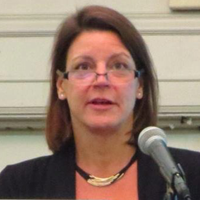
Nancy Pelosi, Speaker Emerita of the U.S. House of Representatives, and Robert Reich, former U.S. Secretary of Labor, were among those offering congratulations and encouragement to the Archive at the celebration of “Democracy’s Library: Tools for Participation.”

“Preserving the data is essential to a democracy,” Speaker Emerita Nancy Pelosi declared from the stage at the Funston Avenue headquarters. “Lincoln said, ‘Public sentiment is everything. With it, you can accomplish almost anything. Without it, practically nothing.’ But for public sentiment to prevail, you have to know—and we have to show them where they can find out.”

Pelosi reminisced about time spent with her five children at public libraries, and her service as a library commissioner. Much has changed over the years in preserving and communicating information, she said, but libraries must continue for a free society to thrive.

Speaker Emerita Nancy Pelosi on stage at the Internet Archive.
Speaker Emerita Nancy Pelosi

“To me, libraries are about freedom. Libraries are about liberty,” Speaker Emerita Nancy Pelosi said, urging the audience to seek out candidates for Congress who share the public’s love and support of libraries.

Making the Public Record Accessible

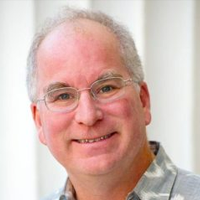
Internet Archive founder and digital librarian Brewster Kahle told the audience that democracies need an educated populace and public access to government information. “Just because something’s in the public domain, doesn’t mean that it’s publicly accessible,” he said. “If it’s accessible today, it doesn’t mean that it’s going to be accessible tomorrow.”

That’s why the Internet Archive is committed to leveraging digital tools to preserve government documents and make them easy for the public to access, Kahle said. Last year, the Archive joined more than 1,000 libraries in the United States as a designated Federal Depository Library to make government information permanently available. Since 2004, it has been collecting born-digital government publications; now it is digitizing the print and microfiche past.

“We want this material to really come to life. That’s our shared heritage that has been authored at taxpayer expense,” Kahle said. “We want to celebrate openness. Openness brings us together. Openness, communities, and democracies all are needed to build a world that we want to be in.”

In video remarks played at the Oct. 21 event, Reich said attacks on free speech and efforts to control access to information threaten the foundation of our democracy.

“Understanding our history, analyzing government data, holding the powerful accountable – it all centers on being able to access information freely, and it all now lives digitally,” Reich said. “Authoritarian laws to restrict this access makes the Internet Archives work more critical than ever. Restricting our access to digital information makes us less informed, less inspired, and easier to control.”

Reich expressed appreciation for the leadership of the Internet Archive in safeguarding the historical record.

“Thank you to the Internet Archive for your tireless work protecting and preserving our access to information in today’s digital world,” Reich said. “Your work is crucial against authoritarianism and sorely needed to protect our democracy.”

Celebrating Community Heroes

The program highlighted how individuals can make use of preserved local government documents to make a difference in their communities.

Eric Hryniewicz was recognized as a “hometown hero” for discovering land being eyed for development in Falmouth, Massachusetts, near the town’s water supply was actually protected.

With the help of records scanned at the New England Regional Digitization Center at the Boston Public Library, Hryniewicz showed the town had purchased the forested land under consideration in the early 1930s for conservation. Joining with other citizens, Hryniewicz made the case to the town government to halt the development.

Speaking at the event, he urged the public to make use of archives and libraries in their collective action efforts.

“I was not an expert in deeds. I’m not a lawyer. I was just a person that cared about a place,” Hryniewicz said. “I went looking for an answer and went to the library. I doubted the narrative sold to us and a librarian pointed us to the Internet Archive. What we found there was a story of care and compassion for us. Our predecessors had put together considerable resources … to guarantee a future where you have open space and clean water in the town, and that history had been lost.”

The 2026 Internet Archive Hero Award was presented to the Poynter Institute and Investigative Reporters and Editors (IRE) for providing tools and training to preserve local news online. The annual award recognizes individuals and organizations that have demonstrated leadership in making information available to people around the world. Learn more about this year’s recipients.

“Over the past two decades, the United States has lost nearly 40 percent of its local newspapers,” explained  Anna Trammel, program manager of archiving & data services at Internet Archive. “When that happens to a community, something really irreplaceable is lost … coverage of the school board meeting, budget cuts, or the local election. The information that’s not available anywhere else and that matters most to the people who live in that community.”

Through the Today’s News for Tomorrow (TNT) program, Poynter and IRE are connecting journalists in 300 newsrooms with free access to the Internet Archive’s web archiving and preservation services to save their work.

“Strong journalism is at the core of a healthy democracy. We have not spent a lot of time, however, thinking about what happens to the first draft of news after we witness and report it,” said Kristen Hare, Poynter’s director of craft and local news. “We’re really honored on behalf of the Pointer Institute to accept this award…We’re concerned not just with preserving the work of individual journalists but making sure that a community’s memory stays preserved for future generations.”

Jonathan Kealing, executive director of IRE, said the impact of investigative accountability reporting isn’t always recognized at the time the story is published. “That work can take a long time to find its ultimate end,” he said. “In an era when we’re seeing newsrooms close and shut down, we risk that work never reaching its fullest potential if we don’t preserve it for perpetuity on the Internet Archive.” 

Kealing expressed gratitude for partnering with the Archive and Poynter to ensure that the work of journalists is preserved for communities and people to access long into the future.

Participation for All

The evening wrapped with a tribute to the music in the public domain that artists can use as a tool for participation to remix and reimagine.

The Internet Archive recently partnered with WNYC, a public radio station in New York City, on their  Public Song Project, an annual contest where people are invited to contribute recordings of songs created based on works in the public domain.

WNYC's Simon Close with Public Song Project winners Gabrielle and Dexter-Marie.
WNYC’s Simon Close with Public Song Project winners Gabrielle and Dexter-Marie.

Simon Close, a producer for WNYC and steward of the Public Song Project, announced that submissions were received from all over the world and songs by the finalists have been preserved in a collection on the Internet Archive. Two of the winners, Gabrielle and Dexter-Marie, were recognized on stage. A portion of their song, “Now You Know,” based on a sample of “Nobody Knows the Trouble I’ve Seen,” recorded by Marian Anderson, was played for the audience.

Close led the audience in playing kazoos to the tune of the “Battle Hymn of the Republic,” with lyrics he adapted from the Internet Archive’s About page as “The Battle Hymn of the Internet Archive” singing….

“We began in 1996 by archiving the Internet itself, a medium that was just beginning to grow in use. Today we have 30 years of web history accessible through the Wayback Machine. One trillion web pages, 56 million books and, 13 million audio recordings, 15 million videos, 5.3  million images, 1.3 million software programs, in our first 30 years!”

A Behind-the-Scenes Look at the Physical Archive

Internet Archive’s digital librarian, Brewster Kahle, leads a tour through the Physical Archive.

Visitors who came to the open house at the Physical Archive in Richmond, California, on October 20 were curious. They wanted to learn about the range of items collected, the process of preservation, and the staff responsible for making it all happen. 

As people toured the space and observed the various media being saved, many also expressed support and reverence for the Internet Archive’s work to provide universal access to all knowledge.

VIEW PHOTOS FROM THE EVENT

“I really care about preservation and digital culture. Places like this are important to maintaining and building the society we want to live in,” said Sidney Le, a film archivist who now works in logistics, of his third visit to the Physical Archives. “It’s good to see that people here are taking seriously the idea of holding on to culture and preserving it.”

A Closer Look at Collections

Liz Rosenberg

Liz Rosenberg, donations manager for the Archive, welcomed the crowd in Richmond and provided directions for the evening.

“Thank you all so much for coming to our open house, where we can showcase the amazing preservation work done in the Internet Archive,” she said. “Here, you will see many special collections and interesting preservation demos showcasing the work that our incredible team does to preserve, digitize, and make accessible collections to patrons from all over the world.”

Rosenberg invited visitors on tours of the facility with Internet Digital Librarian and Founder Brewster Kahle, as well as a chance to see the Scribe book digitization workstation, a presentation on dehumidification of books, and observe microfiche digitization.

For visitors in the special collections room, Caslon Kahle pointed out new donations on display including Romanian history documents from the estate of professor Keith Hitchins, climate records from the National Oceanic and Atmospheric Administration (NOAA) and materials from more than 9,000 Freedom of Information Act requests filed by San Francisco’s legendary researcher Ernie Lazar.

Why These Collections Matter

Ivy Shaw and Max Buettner, both doctoral students at University of California, Berkeley, came to the event because they said they are big fans of the Internet Archive.

Buettner said he was impressed by the sheer quantity of material at the facility and unique items in special collections, such as a paleotectonic map of the Jurassic. Studying classics, he said he relies on the Internet Archive for rare materials he can’t find anywhere else – once discovering a manual on the Etruscan language online.

“Our library at Berkeley did not own a copy of this very important book, and the Internet Archive did,” Buettner said. “It’s sort of a miracle that we have this Internet Archive that can supplement these university libraries.”

Shaw, who is in a French PhD program, said seeing the books at the Physical Archive on so many topics made her appreciate the nonprofit organization’s effort to make knowledge available to all. “The Internet Archive allows you to access things in a very ethical way so you can feel good about supporting it,” Shaw said.

On a recent Friday tour of the Internet Archive’s headquarters in San Francisco, Shawdi Sani became curious about how the physical material was stored, so she registered for the event. Exploring the Richmond facility, she was captivated by the microfiche station and the customized software and equipment used in the restoration. “It was interesting how they brought that back to life,” she said. “It was kind of archaic and now it’s very useful.”

Sani, who works in applied machine learning, said she’s interested in seeing how the internet has evolved over time.

“As someone in Gen Z and with AI everywhere, there’s a huge need I see among my peers to go back to when the internet was less monetized and more raw,” said Sani, who enjoys exploring old websites, such as Gawker, saved by the Archive.

Preserving Today for Tomorrow

New to the event this year was a recording studio set up in an Airstream trailer parked outside the warehouse. 

“Talk to the future,” Marc Weber said to visitors who walked up to check it out. Those who were game were asked to pull a question out of the hat such as “Why do you think preservation is important?” or “What’s your favorite item/collection on the Internet Archive?” to answer.

The soundbites will be shared on social media and preserved online. “It’s an informal way to capture what people are thinking today,” said Weber, an historian and curator for the Internet Archive. “Ten or 20 years from now it will be interesting to see what was on people’s minds.”

There were also postcards set out for people to fill out asking:  “What’s your commitment to preservation?” Then, Archive staff will mail the postcards to them in three months as a reminder of their pledge, explained Chris Freeland, director of library services at the Internet Archive.

Charlie Robinson, an engineer from San Francisco, said he relies on the Internet Archive often when he can’t find a book or piece of media anywhere else. “The Internet Archive is one of those things where if it didn’t exist and somebody tried to explain it to you, it wouldn’t sound like an inevitable thing or even possible,” he said at the event in Richmond. “And I’m so glad that I live in a universe where it exists.”

The Internet Archive’s efforts to preserve all forms of media and chronicle digital history is something to be revered, said Eric Ma, applied scientist working in tech in the Bay area. 

“It’s all in the public good and not motivated by profit. Honestly, I can’t really name another organization quite like it,” said Ma, who especially enjoyed seeing the collection of vinyl at the Physical Archive. “So many people are willing to donate their whole collection over to the Archive. It makes me have hope in humanity a little bit more.”

Registration is Now Open For Internet Archive’s Annual Celebration

Democracy’s Library: Tools for Participation
Wednesday, October 21, 2026
Internet Archive, San Francisco
REGISTER: In person | Virtual

Democracy invites participation; democracies require it.

At the Internet Archive, we believe libraries can help make that participation possible by preserving knowledge and providing the tools to explore and build upon it. This year, our annual celebration, “Democracy’s Library: Tools for Participation,” will showcase the many ways people can participate through the Internet Archive—from saving and contributing materials to exploring government records, researching history, and building new tools with our collections and APIs.

We’ll celebrate the Wayback Machine and the many other Internet Archive tools that help people preserve, explore, share, and build knowledge together.

We’ll also spotlight partners and creators who are building on top of the Internet Archive’s data and infrastructure, demonstrating how shared library resources can become a foundation for discovery and collaboration. In person and via livestream, we’ll explore what happens when a library doesn’t just preserve knowledge, but gives people the tools to use it, build with it, and participate in creating what comes next.

Celebrate with us!

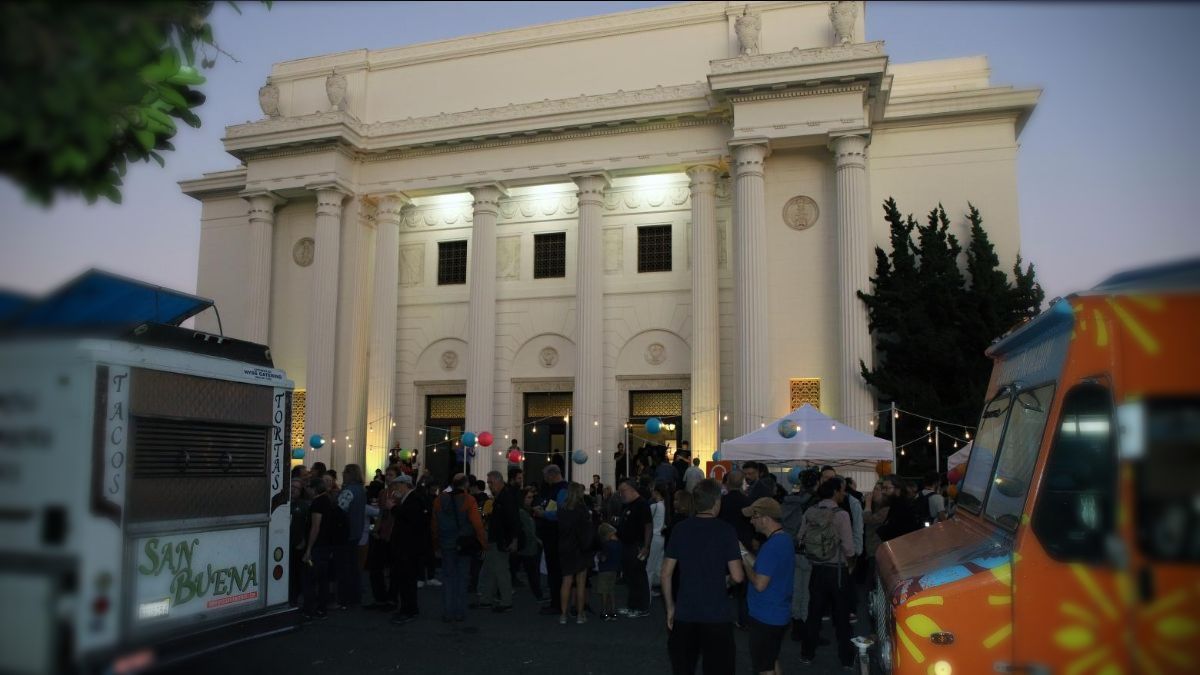
Our annual celebration is a hybrid event, with an in-person street party at Internet Archive headquarters in San Francisco and a livestream for those joining from afar.

In person: Wednesday, October 21, at 300 Funston Avenue, San Francisco.
REGISTER NOW

Virtual: Join the livestream from wherever you are.
REGISTER NOW


Go behind the scenes at the Physical Archive

Doors Open

Doors Open: Go Behind the Scenes at the Physical Archive
Tuesday, October 20, 2026

Physical Archive, Richmond, California
REGISTER: In person

The celebration begins the night before with a special opportunity to peek behind the doors of the Physical Archive in Richmond, California.

Join us on Tuesday, October 20, from 6–8 p.m. for a behind-the-scenes tour of the physical collections of books, music, film, and video.

This special insider event offers a look at the lifecycle of physical materials—from donation and preservation to digitization and access. We’ll also have samples from generous donations and acquisitions of books, records, microfiche, and more on display.

Light refreshments will be provided.

REGISTER NOW

On-site parking is limited. Guests are encouraged to use alternate transportation.

One Trillion Web Pages Archived: Internet Archive Celebrates a Civilization-Scale Milestone

Photo by Ruben Rodriguez, October 22, 2025.

One trillion! There was no mistaking the number that was center stage at the Internet Archive in San Francisco on October 22.

“We are celebrating a major goal of one trillion web pages…shared by people all over the world, wanting to make sure that what they know is passed on,” said Brewster Kahle, Internet Archive’s founder and digital librarian. “It’s a fantastic, phenomenal success story.”

Watch the livestream:

Since 1996, the Wayback Machine has been saving the digital history of the internet. In October, it surpassed the threshold of preserving one trillion web pages—a fact that was met with enthusiastic applause each time it was mentioned at the party held at the non-profit research library’s Funston Avenue headquarters in San Francisco.

People should not take for granted the important role that libraries, including the Internet Archive, have played in compiling accurate information and making it accessible to all, said California State Senator Scott Weiner, who presented a Certificate of Recognition from the State of California Senate to the Internet Archive. “We’re seeing now in this country people trying to rewrite history and come up with alternative facts,” he said at the event. “What the Internet Archive and the Wayback Machine does is to make clear that everything is there. I am so deeply grateful.” [watch remarks]

California State Senator Scott Weiner. Photos by Brad Shirakawa, October 22, 2025.

In a video message, Vint Cerf, creator of the Internet and vice president and chief internet evangelist at Google, said the one-trillion-page mark is an incredible milestone. “[The Internet Archive] has preserved an enormous amount of history over the course of their data collection, something which I feel is absolutely essential,” he said. “In the absence of what they have done, the 22nd century will have no clue what the 21st Century was all about.”

Looking Back, Looking Ahead

The program included a glimpse back at early days of the web and a hopeful vision for the future.

“There was this dream of an internet that was made for us, by us, to be able to make us better people,” Kahle said. “Yes, using technology. Yes, having games with lots of different players and winners—a fun and interesting world, and that is very much still within our grasp.”

Audrey Witters, creator and community builder

Audrey Witters, a veteran of the early web, brought the audience back to 1994—when all existing websites could still fit on a single “What’s New” page. Reflecting on her early days at NCSA and her creative experiments on GeoCities, Witters shared the story of how a small animated alien GIF she helped create became an unlikely icon of the early web. “It’s so important for us to remember that context, that spirit, that joy of creation—what happens when you give people the tools and invitation to publicly and exuberantly celebrate themselves,” she said. Thanking the Internet Archive for preserving that era’s spirit of discovery and collaboration, Witters urged the next generation of creators “to look for new opportunities to promote exploration, collaboration, and joyful expression. Here’s to the next trillion!”

Lily Jamali, BBC News

Lily Jamali, an investigative journalist with BBC News, said she appreciates the Archive’s public service mission and tools that are “absolutely fundamental” to hold the powerful to account. “They help us journalists fact check claims,” she said from the Great Room stage. “They help us see how companies and governments may have selectively edited online materials, or even deleted statements or social media posted that they would rather that the public didn’t see.” [watch remarks]

Journalists can no longer rely on their news outlets to store their work, Jamali said, so many turn to the Wayback Machine to access past articles and inform their reporting.

In a highly entertaining segment full of Wikipedia screen shots and laughs, Annie Rauwerda, creator of Depths of Wikipedia, spoke about the crucial partnership between Wikipedia and the Wayback Machine. She highlighted how archived pages make citations stronger and more durable by ensuring that even when the original source disappears, the evidence remains. “If Wikipedia is worth anything at all, it’s because of the citations,” Rauwerda said.

Annie Rauwerda, Depths of Wikipedia

CEO of National Public Radio Katherine Maher offered her congratulations via video for the event. “One trillion web pages. That’s one trillion artifacts and snapshots of our interconnected world,” she said. “It’s a testament to the Internet Archives’ unwavering commitment to safeguarding the integrity of the open web and its history, ensuring that this vast digital record remains free and open for everyone.”

NPR and the Internet Archive share a deep commitment to providing access to information, a dedication to public service and a belief in strengthening societies through information and dialog, Maher said. “We live today in an era in which information is unstable. It emerges suddenly, decays rapidly, disappears instantly,” she said. “In this moment, the Archive’s role in preserving news, public discourse and our shared stories is more critical than ever.”

With Wayback Machine, ‘Knowledge Will Not Be Lost’

Mark Graham, director of the Wayback Machine

When the U.S. government websites started going offline after the change in presidential administrations earlier this year, Mark Graham, director of the Wayback Machine, said he wasn’t panicking. Why? Because since 2004 the Internet Archive has collaborated with many partners to save federal web pages, through the End of Term Web Archive effort. Since last fall, Graham described efforts to preserve more than 400 million web pages, 2 million videos and hundreds of thousands of data sets—all published by the U.S. government, and therefore available to the public. [watch remarks]

With the Wikimedia Foundation, the Archive has identified and fixed more than 28 million broken links from Wikipedia. It also added more than 4.2 million links to books and papers available from www.archive.org. Graham announced the new partnership with Automattic Inc. to make it easy for WordPress operators to automatically find and repair broken links with the Internet Archive Wayback Machine Link Fixer.

The Internet Archive faces challenges with the advent of AI. More services are blocking access, Graham said, making it harder for memory institutions, like the Internet Archive, to do their  jobs—yet, the team remains diligent in its efforts.

“We’re going to keep on building the library that the world deserves, one that remembers, one that connects us, and one that ensures no matter how much the web changes, that knowledge will not be lost,” Graham said.

The Path Forward

Luca Messarra, cultural historian, Stanford University

Luca Messarra, a humanities scholar and educator at Stanford University, said preserving webpages is important because the past is always shaping the present moment. “History is essential because it helps us understand how our own lives came to be. But more importantly, for me, history helps us understand how our lives can be made different,” he said. “The past tells us that the present does not need to be the way that it is.” [watch remarks]

Messarra said he has used resources from the Internet Archive to write conference papers, recover his old chat messaging history and recover a favorite family biscuit recipe.

“The Wayback Machine has tended to one trillion seeds that will nourish our future. All that remains is for us to harvest and use them,” Messarra said. “One trillion pages are one trillion opportunities to change our present moment. That requires that we look at the past not with nostalgia, but with initiative.”

The largest repository of internet history ever assembled is possible thanks to thousands of donations to the Internet Archive and 200,000 unique donors, said Joy Chesbrough, director of philanthropy. At the event, she announced a new campaign that encourages individuals to create their own fundraising teams to support the Internet Archive. See https://donate.archive.org/1t [watch remarks]

It was the largest gathering for the Archive’s annual party in years, said Chris Freeland, director of library services, and he hoped the gathering fostered a sense of connection.

“It was a nostalgic throwback, but it also showed people a path forward for a web that we want,” Freeland said. “I hope people come away with this sense of optimism and a thought that this is our web, and we can be in control of it again.”

Registration is Now Open for Internet Archive’s October Events

This October, the Internet Archive will celebrate an extraordinary milestone: 1 trillion web pages preserved and available for access via the Wayback Machine.

The series of events scheduled throughout October will highlight the people, technology, and community efforts that have made this achievement possible, and will look ahead to the future of web preservation as we continue building the web’s collective memory together.

Oct 7 – The Vast Blue We: An interactive evening of live music with Del Sol Quartet, featuring new works by Erika Oba and Sam Reider, exploring the wonder of human collaboration. (7–8:15pm PT | San Francisco & online) — Learn more & register

Oct 21 – Doors Open 2025: Go behind the scenes at the Physical Archive to see the lifecycle of books, records, film, and more—from donation to digitization. (6–8pm PT | In person only) — Learn more & register

Oct 22 – The Web We’ve Built: Our annual celebration, marking 1 trillion webpages preserved in the Wayback Machine. Join us in San Francisco or online for an evening of talks, performances, and community. (5–10pm PT | Live stream 7–8pm PT) — Learn more & register

Celebrate with the Internet Archive on October 22nd & 23rd

Escaping the Memory Hole

Join us on October 22nd & 23rd to help celebrate the vital role of libraries in preserving our shared digital culture.


October 22: Tour the Physical Archive

Please join us on Tuesday, October 22 from 6-8pm as we take a peek behind the doors of the Physical Archive in Richmond, California.

We are excited to offer a behind-the-scenes tour of the physical collections of books, music, film, and video in Richmond, California.

With this special insider event we are opening the doors to an often unseen place. See the lifecycle of physical books—donation, preservation, digitization, and access. Also, samples from generous donations and acquisitions of books, records, microfiche, and more will be on display.

REGISTER NOW for the physical archive tour.


October 23: Join our annual celebration—in-person & online!

In a world where major entertainment websites vanish overnight and streaming media disappears from platforms without warning, our digital culture is at risk of being erased. What safeguards are in place to preserve our collective memory?

Join us October 23rd for the Internet Archive’s annual celebration. This year’s gathering, “Escaping the Memory Hole,” explores the vital role that libraries play in protecting our digital heritage. As corporate decision-makers increasingly control what stays online, libraries like the Internet Archive stand as guardians of our shared digital culture, ensuring that it remains preserved and accessible for future generations.

Event details

5pm: Entertainment and food trucks
7pm: Program in our Great Room
8pm: Dancing in the streets

Location: 300 Funston Ave. at Clement St., San Francisco

Register now for in-person or virtual attendance.

Join Us for Our Annual Celebration – Thursday, October 12!

We are just one week away from our annual celebration on Thursday, October 12! Party in the streets with us in person or celebrate with us online—however you choose to join in the festivities, be sure to grab your ticket now!

What’s in Store?

📚 Empowering Research: We’ll explore how research libraries like the Internet Archive are considering artificial intelligence in a live presentation, “AI @ IA: Research in the Age of Artificial Intelligence.” Come see how the Internet Archive is using AI to build new capabilities into our library, and how students and scholars all over the world use the Archive’s petabytes of data to inform their own research.

🏆 Internet Archive Hero Award: This year, we’re honored to recognize the incredible Connie Chan, our local District 1 supervisor, with the prestigious Internet Archive Hero Award. Supervisor Chan’s unwavering support for the digital rights of libraries culminated in a unanimously passed resolution at the Board of Supervisors, and we can’t wait to present her with this well-deserved honor live from our majestic Great Room. Join us in applauding her remarkable contributions!

🌮 Food Truck Delights: Arrive early and tantalize your taste buds with an assortment of treats from our gourmet food trucks.

💃 Street Party: After the ceremony, let loose and dance the night away to the tunes of local musicians, Hot Buttered Rum. Get ready to groove and celebrate under the starry San Francisco sky!

🎟️ Register now for in-person or online attendance!

Internet Archive’s Annual Celebration
Thursday, October 12 from 5pm – 10pm PT; program at 7pm PT
300 Funston Avenue, San Francisco
Register now for in-person or online attendance

Celebrate with the Internet Archive on October 11th & 12th

Join us on October 11th & 12th to help celebrate AI @ IA : Research in the Age of Artificial Intelligence!

October 11: Tour of the physical archive

Please join us October 11th @ 6-8pm as we take a peek behind the doors of the physical archive in Richmond, California.

We are excited to offer a behind-the-scenes tour of our physical collections of books, music, film, and video in Richmond, California.

With this special insider event we are opening the doors to an often unseen place. See the lifecycle of physical books – donation, preservation, digitization, and access. Also, samples from generous donations and acquisitions of books, records, microfiche, and more are presented.

Register now for the physical archive tour


October 12: Join our annual celebration – in-person & virtual

Artificial Intelligence rocking your boat? Join us October 12th to see how the Internet Archive is using AI to build new capabilities into our library, and how students and scholars all over the world use the Archive’s petabytes of data to inform their own research.

This year’s event is hybrid. We will be celebrating in-person at our main library in San Francisco, and will be livestreaming the event itself from 7pm-8pm PT for those who want to celebrate with us from afar!

Register now for in-person or virtual attendance

Event details

5pm: Entertainment and food trucks
7pm: Program in our Great Room
8pm: Dancing in the streets

Location: 300 Funston Ave. at Clement St., San Francisco

Registration is required: Register now for in-person or virtual attendance.

Leaders in the Open World, Intellectual Property, and Social Justice Join Our Public Domain Day Celebration

The public domain is an invaluable component of our culture, allowing for the remixing, reinterpretation, and redistribution of designated works without restriction. On December 17th, we’ll be celebrating the works published in 1925 that will be moving into the public domain when the clock strikes midnight on January 1, 2021. Our virtual celebration is free and open to the public.

As part of our celebration, we’re bringing together leaders in the open world, intellectual property, and social justice to discuss the value of the public domain for creative expression and open scholarship, and provide perspectives on the marginalized communities that have been left out of the copyright system in the United States.

ABOUT OUR SPEAKERS

KEVIN J. GREENE, SOUTHWESTERN LAW A graduate of the Yale Law School and a veteran of the United States Marines, Professor Kevin J. Greene is the John J. Schumacher Chair Professor at Southwestern Law in Los Angeles, California. Professor Greene’s scholarship in the areas of copyright, trademark and publicity rights has garnered national and international recognition in the intellectual property (“IP”) arena, particularly his pioneering work on African-American music and copyright law.

JENNIFER JENKINS, CENTER FOR THE STUDY OF THE PUBLIC DOMAIN Jennifer Jenkins is a Clinical Professor of Law at Duke Law School and Director of Duke’s Center for the Study of the Public Domain, where she writes its annual Public Domain Day website. She is the co-author (with James Boyle) of two comic books — Theft! A History of Music, a 2000-year history of musical borrowing and regulation, and Bound By Law?, a comic book about copyright, fair use and documentary film — as well as the open coursebook Intellectual Property: Cases and Materials (4th ed, 2018). Her articles include In Ambiguous Battle: The Promise (and Pathos) of Public Domain Day and Last Sale? Libraries’ Rights in the Digital Age. She is currently writing a book on “Music Copyright, Creativity, and Culture” (forthcoming from Oxford University Press).

HEATHER JOSEPH, SPARC Since her appointment as SPARC’s Executive Director in 2005, Heather has focused the organization’s efforts on supporting the open and equitable sharing of digital articles, data, and educational resources. Under her stewardship, SPARC has become widely recognized as the leading international force for effective open access policies and practices. Among her many achievements, she convened the Alliance for Taxpayer Access and the Open Access Working Group, which provided critical advocacy for the establishment of the landmark 2008 NIH Public Access Policy and the 2013 White House Memorandum on Public Access to Federally Funded Research.

BREWSTER KAHLE, INTERNET ARCHIVE A passionate advocate for public Internet access and a successful entrepreneur, Brewster Kahle has spent his career intent on a singular focus: providing Universal Access to All Knowledge. He is the founder and Digital Librarian of the Internet Archive, one of the largest libraries in the world. In 1989, Kahle created the Internet’s first publishing system called Wide Area Information Server (WAIS), later selling the company to AOL. In 1996, Kahle co-founded Alexa Internet, which helps catalog the Web, selling it to Amazon.com in 1999. The Internet Archive, which he founded in 1996, now preserves petabytes of data – the books, Web pages, music, television, and software that form our cultural heritage.

KATHERINE MAHER, WIKIMEDIA FOUNDATION Katherine Maher is the CEO of the Wikimedia Foundation, the nonprofit organization that operates Wikipedia and the Wikimedia projects. She is a longtime advocate for free and open societies, and has lived and worked around the world leading the introduction of technology and innovation in human rights, good governance, and international development. Katherine has worked with UNICEF, the National Democratic Institute, the World Bank, and Access Now on programs supporting technologies for democratic participation, civic engagement, and open government. She is a member of the World Economic Forum’s Global Council on Human Rights and the Council on Foreign Relations, and a fellow at the Truman National Security Project. She is on the Board of the American University of Beirut, and the Digital Public Library of America.

LATEEF MTIMA, INSTITUTE FOR INTELLECTUAL PROPERTY & SOCIAL JUSTICE Lateef Mtima is the Founder and Director of IIPSJ; he is also a Professor of Law at the Howard University School of Law where he regularly teaches courses in intellectual property law and commercial law. Professor Mtima is a graduate of Amherst College and Harvard Law School. He has published numerous articles on copyright, publicity rights, and diversity in the legal profession, and is the editor of Intellectual Property, Social Justice, and Entrepreneurship: From Swords to Ploughshares (Edward Elgar 2015), and a co-author of Transnational Intellectual Property Law (West Academic Publishing 2015).

CATHERINE STIHLER OBE, CREATIVE COMMONS Catherine Stihler OBE is the CEO of Creative Commons. She has been an international champion for openness as a legislator and practitioner for over 20 years. After graduating from St Andrews University, she worked in the British House of Commons as a researcher before successfully standing for election as a Member of the European Parliament (MEP) for Scotland in 1999, representing the UK Labour Party. In 2019, Catherine was awarded the title of Officer of the Order of the British Empire (OBE) by Her Majesty the Queen in recognition of her services to politics. Catherine joined Creative Commons in 2020.

Celebrate at the Internet Archive — 1024 — Thursday Oct. 24th

(Full Video of event.   Announcement as posts: 1, 2, and 3)

Internet Archive invites you to a fun evening in San Francisco on October 24th for our once-a-year celebration and announcements of new services. (And it just so happens to fall on 1024, which our fellow geeks will recognize as 2^10.)  We will drink and be merry with our friends, then gather together to tell you about the new steps we’re taking to guarantee permanent, free access to the world’s knowledge.  

No More 404s

October 24, 2013
Free Admission, Donations Welcome
6pm – 7pm : Cocktails and Reception
7pm – 8pm : Announcements
300 Funston Ave., San Francisco CA 94118
415-561-6767

Clapper

Please RSVP – we don’t want to run out of wine!

Some of the things we’ll share include:

  • No more broken links. Help wipe out dead links on the Internet with new tools and APIs to replace dead links with archived versions.  Down with 404s!
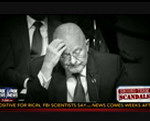
  • Reader PrivacyQuotable Television News.  A new interface for the TV News Research Service will facilitate journalists, bloggers and your news-addicted relatives to search, quote short clips and borrow from a massive, searchablearchive of U.S.television news programs.
  • Reader Privacy for All.  We are helping to protect the reading habits of our users from prying eyes by increasing encryption and keeping less user data.
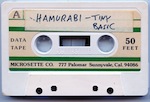
  • Data tape with HamurabiBringing Old Software Back to Life.  First steps to bring the software for Apple II’s, Commodore 64’s etc back from cassette and to the web.
  • Petabytes, Gigabits, and More.  Come see for yourself!